


Personal growth is the quest to become the best version of people. It is a journey that often involves learning new skills, adapting to change, setting goals, overcoming challenges, and developing a deeper understanding of your identity and values in order to succeed in life. This journey can be inspired by a variety of life experiences, such as education, relationships, career challenges, failures, or introspective exercises such as meditation.
Mental health, known as a person’s emotional, psychological, and social well-being, is an important determinant of how a person thinks, feels, and acts. Mental health affects how people handle stress, relate to others, and make choices. On the other hand, personal growth is the interactive process of developing self-awareness, improving skills, achieving goals and realizing full potential. There is a direct and dynamic relationship between mental health and personal growth. A healthy mind always provides the clarity, motivation, and resilience needed for self-improvement, while poor mental health can hinder progress and reduce a person’s ability to move forward. Therefore, it is essential to understand the connection between mental health and personal development to live a balanced and fulfilling life.

Essences of Personal Growth:
Self awareness: Self-awareness is the first step in personal development that involves becoming aware of one’s thoughts, feelings, behaviors, and motivations. Self-awareness is the foundation on which all personal growth is built. It is an important psychological skill that helps individuals gain insight into their inner world and how it affects their relationships with the outside world. Without understanding who we are – what our strengths and weaknesses are, what our habits and beliefs are, it becomes nearly impossible to make meaningful changes or improvements in our lives. With increased self-awareness, people can identify areas of improvement, set meaningful goals, and make better decisions that lead to personal growth.
Discipline: Discipline is a person’s ability to control their desires, stay focused, and stay committed to long-term goals. It makes it easier to turn aspirations into achievements. It is discipline that maintains motivation over time. Personal growth requires constant effort. Whether it’s exercising regularly, reading to increase knowledge, practicing a skill, or any other endeavor, discipline turns good intentions into daily habits. Developing discipline involves resisting short-term temptations in favor of long-term benefits. This isn’t always easy, but it’s important. By training the mind to persevere and remain committed in the face of challenges, discipline becomes a powerful tool for change.
Resilience: There is no personal development journey free from obstacles. Resilience is the ability to recover from failure, setbacks, or emotional pain. It involves maintaining a positive mindset, learning from experiences, and moving forward despite difficulties. People who persevere through adversity often emerge stronger and more self-aware. Rather than being defeated by challenges, resilient individuals see them as opportunities for learning and growth. Developing resilience involves building emotional strength, asking for help when you need it, and developing optimism. It also involves accepting that setbacks are a natural part of progress, not a sign of any kind of failure.
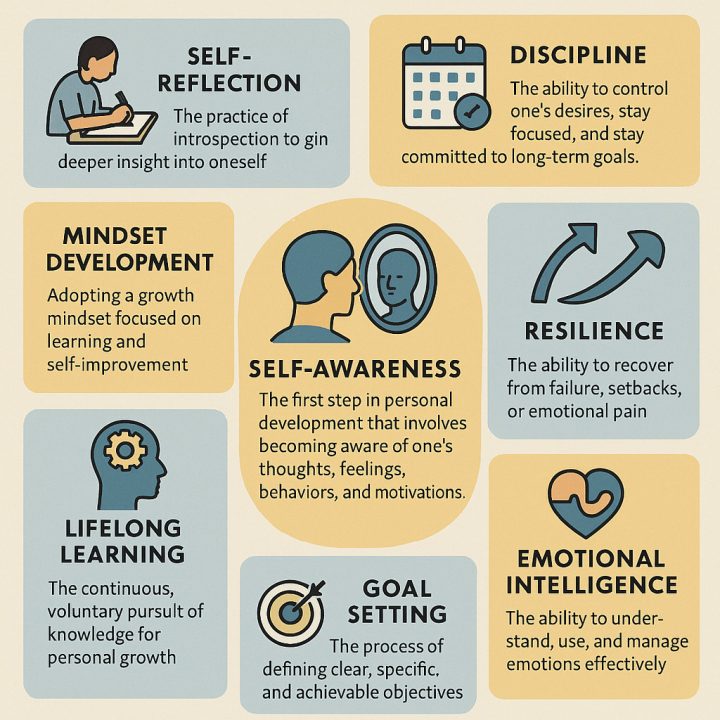
Emotional intelligence: Emotional intelligence is the ability to understand, use, and manage emotions effectively. It includes self-regulation, empathy, social skills, and emotional awareness. High emotional intelligence improves relationships, improves communication, and increases a person’s compassion. In personal development, emotional intelligence helps a person understand complex social dynamics and respond constructively to emotional shocks. It helps people connect with others on a deeper level, increasing mutual understanding and trust. Emotional intelligence can be developed through mindfulness, empathy training, and self-reflection.
Self-reflection: Self-reflection is like looking into the mirror at your inner world. It can sometimes reveal inconvenient truths, but it is a necessary step for meaningful personal growth. Self-reflection is powerful and essential for personal growth. It means taking time to look inside yourself, honestly examining your thoughts, feelings, behaviors, and experiences. By practicing self-reflection regularly, one can empower oneself to learn from life experiences, make conscious improvements, and continually move toward becoming the best that one can be. This transforms experience into learning, which is the essence of growth.
Mindset development: Mindset development is one of the most powerful tools in personal growth. It refers to the beliefs and attitudes people have about themselves, their abilities, and the world around them. People’s mindset determines how they learn, how they cope with challenges, and how far they grow. Developing a positive, growth-oriented mindset is essential to unleashing potential and living a fulfilling life. Adopt a growth mindset – the belief that abilities of any kind can be developed through effort and learning. This is in contrast to a fixed mindset, which views people’s abilities as fixed.
Goal setting: Goal setting is a fundamental exercise in the journey of personal development. It enables individuals to take control of their lives, turn aspirations into actions, and achieve their full potential. Goal setting helps clarify what a person wants to achieve in life. Without goals, personal development becomes vague or aimless. Goals often give individuals a sense of purpose and the motivation to strive. When people create a roadmap by setting clear, specific goals that guide their actions and decisions, this roadmap helps them avoid distractions, manage time effectively, and focus on what’s really important.
Lifelong learning: Lifelong learning is the continuous, voluntary and self-motivated pursuit of knowledge for personal growth. It is an intense mindset that embraces curiosity, adaptability and a desire for continuous improvement at all stages of life. When combined with personal growth, lifelong learning becomes a powerful tool that shapes character, enhances skills, and enriches a person’s understanding of the world. As people grow older, lifelong learning helps maintain a sense of relevance and vitality, which encourages older adults to stay connected, explore new interests, and make meaningful contributions to their families and society.
Steps to foster personal growth and mental health:
The following steps are helpful for personal growth and mental health
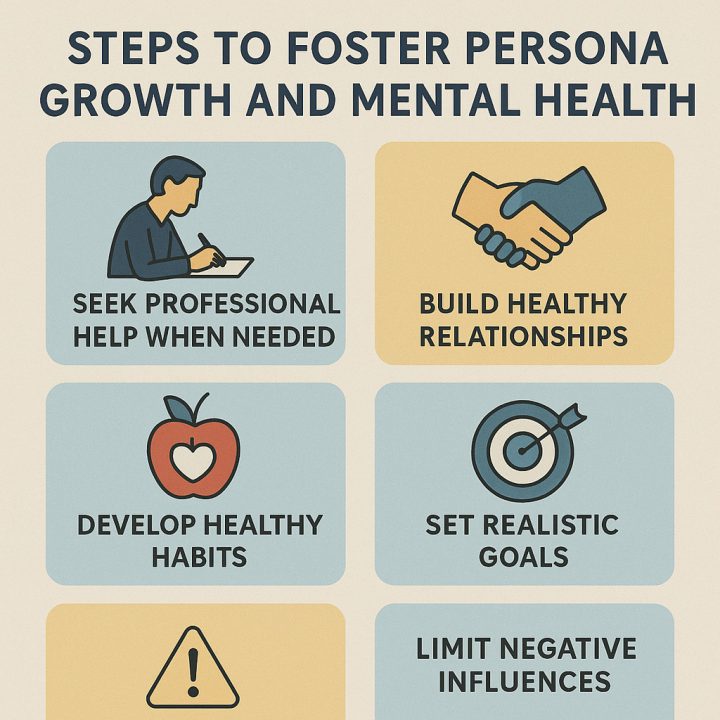
- Seek professional help when needed: Psychotherapy and counseling provide a safe place to explore problems and develop coping strategies. Mental health professionals provide support for personal growth by guiding people in difficult times.
- Build healthy relationships: Surround yourself with people who are supportive and positive, even during the toughest times. Social relationships are important for emotional support and can encourage personal growth.
- Develop healthy habits: Regular exercise, nutritious food, and adequate sleep improve body and brain function and mood. Avoiding substances such as excessive alcohol or drugs is also important for maintaining good mental health.
- Set realistic goals: Create goals that are realistic, break down large goals into smaller, achievable steps. Celebrate progress toward goals to stay motivated and build confidence.
- Limit negative influences: Avoid contact with people and environments that drain your energy and capacity. It is also important to avoid recurring negative thoughts.
Personal growth and society:
As people become more self-aware, responsible, and skilled, they become better equipped to solve problems, innovate, and lead. The personal development of such people leads to the development of society. So a society composed of individuals committed to self-improvement is more resilient and progressive. Personal growth is used to enable individuals to make meaningful contributions in society. Personal growth can challenge and change society. Individuals who question existing norms and pursue new ideas often take responsibility for social change. Such individuals provide new direction to society. There is a complex reciprocal relationship between individual development and society where, on the one hand, society influences the environment and opportunities available for development, while, on the other hand, the personal growth collectively shapes the progress and well-being of society.