


Mental health is becoming a major concern in today’s fast-paced and stressful world. As our material comforts grow, maintaining emotional and mental balance is getting harder. Mental health affects how we think, feel, and behave—it shapes our relationships, decisions, and how we deal with life’s challenges.
People with good mental health can cope with stress, form healthy relationships, and adapt well to change. But for millions, conditions like depression make this difficult.

What Is Depression?
Depression is a serious mental health disorder that impacts how a person feels, thinks, and functions. It’s much more than occasional sadness. People with depression often feel stuck in a cycle of hopelessness that affects every area of their life—social, physical, emotional, and economic.
Despite how common it is, depression remains misunderstood and often carries social stigma. That makes it harder for people to seek help or talk openly about what they’re going through.
If your mindset becomes increasingly negative over time, it can lead to depressive thoughts and behaviors. This isn’t a sign of weakness—it’s a condition that requires understanding and proper care.
Also read: Why is Depression Common?
Symptoms of Depression
Depression shows up differently depending on age, gender, and health background.
- Children often show irritability more than sadness.
- Teens may act out, become withdrawn, or show anger.
- Adults tend to experience deep sadness, social withdrawal, or work difficulties.
- Gender differences: Men may express anger or frustration, while women often report more sadness and emotional fatigue.
- Health conditions: Chronic illnesses or medications can worsen depressive symptoms.
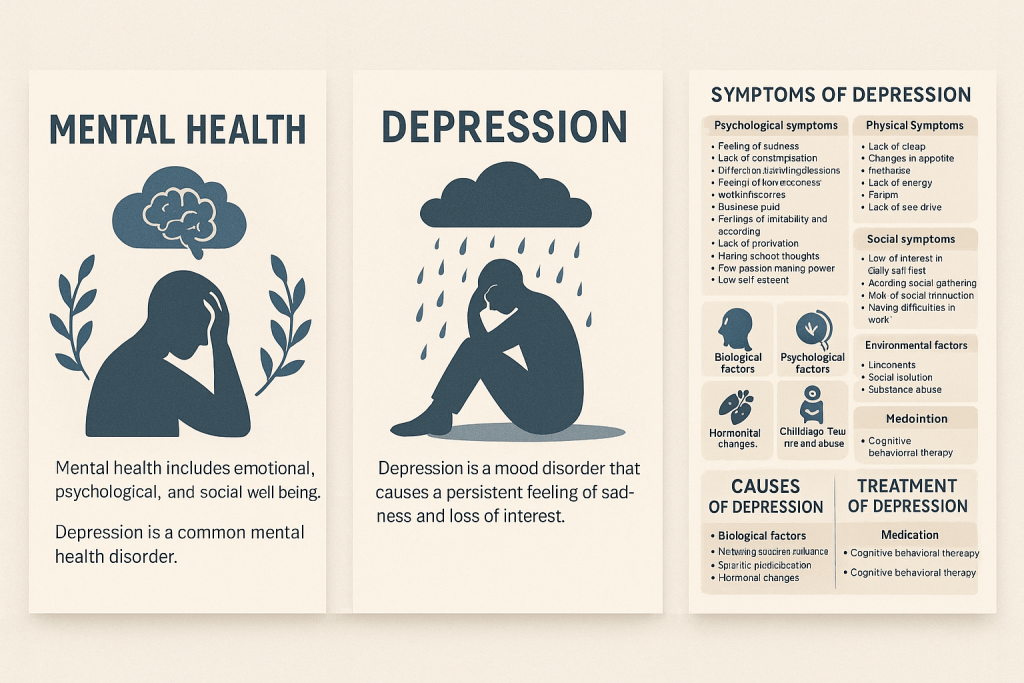
Common Signs of Depression
1. Psychological Symptoms
- Persistent sadness or emptiness
- Low self-esteem
- Trouble concentrating
- Feelings of guilt or worthlessness
- Hopeless outlook
- Suicidal thoughts
- Poor decision-making
2. Physical Symptoms
- Low energy or fatigue
- Appetite changes
- Headaches
- Insomnia or oversleeping
- Reduced sex drive
3. Social Symptoms
- Withdrawal from social interactions
- Disinterest in daily activities
- Struggles at school or work
Not everyone will experience all of these symptoms. Some may have a few; others may face many.
Causes of Depression
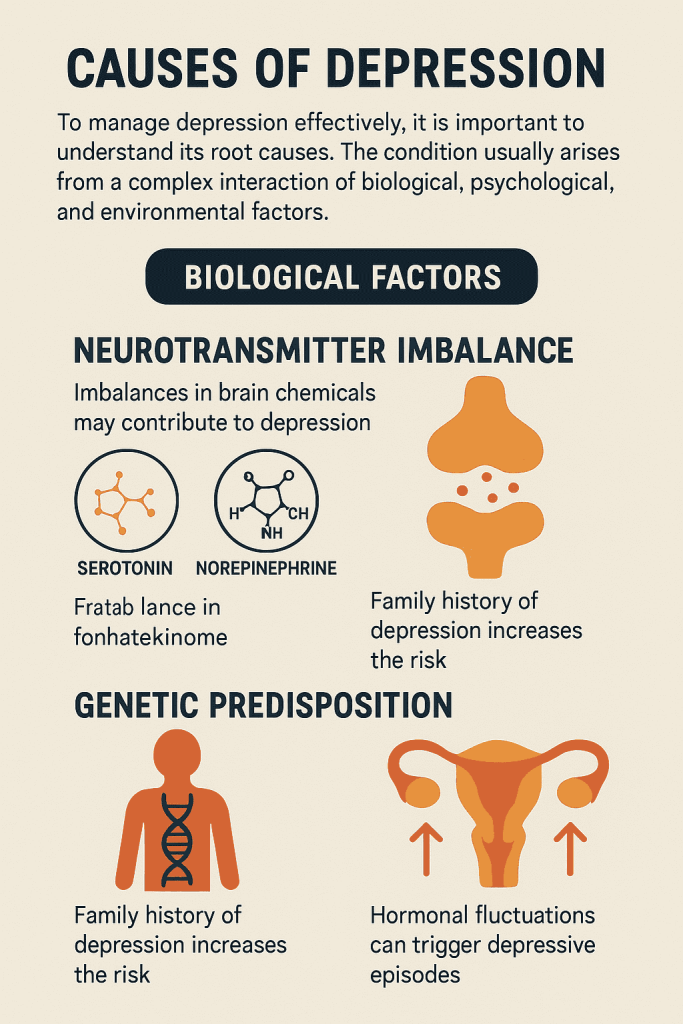
Understanding the causes of depression can help with effective treatment. Usually, it’s a mix of biological, psychological, and environmental factors.
1. Biological Factors
Neurotransmitter Imbalance
Chemical messengers in the brain—like serotonin and norepinephrine—play a big role in mood. If these chemicals are out of balance, it can lead to sadness, irritability, and mental fog.
Genetic Predisposition
Depression often runs in families. If your parents or siblings have struggled with it, your chances may be higher.
Hormonal Shifts
Hormonal changes from menopause, thyroid issues, or postpartum changes can cause depression, especially in women.
2. Psychological Factors

Personality Traits
People who are pessimistic, self-critical, or perfectionists are more prone to depression.
Cognitive Distortions
Negative thinking habits like all-or-nothing thinking, catastrophizing, or overgeneralizing can fuel depression.
Childhood Trauma
Experiences like abuse, neglect, or the death of a parent increase the risk. Trauma shapes how we see the world and ourselves, often in harmful ways.
Related read: Schizophrenia: The Unknown Enemy
Learn more: Understanding Chronic Schizophrenia
3. Environmental Factors
Major Life Events
Losing a loved one, divorce, job loss, or health issues can all trigger depression.
Social Isolation
Lack of support leads to loneliness, which can easily spiral into depression.
Substance Abuse
Using drugs or alcohol to cope with stress often makes things worse and increases depressive symptoms.
Treatment for Depression

1. Medication
Antidepressants help balance brain chemicals. They don’t work instantly—it may take a few weeks. Side effects like nausea, weight gain, or insomnia are possible, so always follow up with a mental health professional.
2. Psychotherapy
Talking therapies like Cognitive Behavioral Therapy (CBT) and Interpersonal Therapy (IPT) can be life-changing. Therapy helps people process emotions, build coping strategies, and make sense of negative thought patterns.
3. Lifestyle Changes
- Regular exercise
- Healthy sleep schedule
- Balanced diet
- Mindfulness or meditation practices
Having trouble sleeping? Check out: Insomnia – Causes and Solutions
Frequently Asked Questions
What is the main cause of depression?
There’s no single cause. It’s usually a combination of genetics, brain chemistry, personality, and life events.
Can depression go away on its own?
Mild depression might improve without treatment, but moderate to severe depression usually needs therapy or medication.
Is depression the same as sadness?
No. Sadness is temporary. Depression is a long-term mental illness that affects many aspects of life.
When should I seek help for depression?
If you’ve been feeling down for more than two weeks, and it’s affecting your daily life, it’s time to talk to a mental health professional.
What’s the connection between mental and personal well-being?
Mental health and personal well-being are deeply connected. Learn more here: Personal and Mental Health
Final Thoughts
Depression is real, serious, and treatable. Don’t ignore the signs. Early intervention, professional help, and supportive relationships can make a huge difference.
For more on improving emotional balance and strength, check out: The Essence of Mental Health