


So you want know how to rewire your brain to think positive? Good. It’s one of the best things you can do for yourself. I’ve spent years in the content world, looking at what works, what doesnt, and the science behind it. A lot of advice out there is fluff. It’s cringe. “Just think happy thoughts!” That’s not how brains work.
Key Takeaways: The Quick Version
Here’s the stuff you need to know, fast. What’s the main point? Your brain can change. It’s not fixed. Science calls it neuroplasticity. You can literally build new pathways in your brain so that thinking positive becomes more of a default, instead of something you have to force.
- It’s Not Magic, It’s Practice: You can’t just wish for a positive brain. You gotta do the work. Small daily habits are what make the big difference.
- Your Brain Likes Negative Stuff: It’s called the negativity bias. It’s a survival thing from way back. Your brain is built to spot threats, which is why bad thoughts can feel so sticky. You have to actively teach it to focus on the good.
- Start Small: Don’t try to do everything at once. Pick one or two things, like a 5-minute meditation or writing down three good things before bed.
- Consistency Beats Intensity: Doing a little bit every single day is way better than doing a lot once a week. It’s how you build those new neural pathways.
- It Takes Time: You won’t be a new person overnight. Give it at least 3 weeks to start feeling a real shift, and a few months for it to become your new normal.
Your brain is a machine, a very powerful one, but it’s running on old software—software designed to keep you safe by focusing on what could go wrong.
The good news? You can update that software. This process is often called brain rewiring, and the science behind it is solid. It’s based on this idea of neuroplasticity.
All that means is your brain is moldable. Like clay. Every time you have a thought, practice a skill, or feel an emotion, you are strengthening certain connections between your brain cells.
The more you do it, the stronger that path gets. This is why bad habits are so hard to break and good ones take time to build. You’re literally carving new roads in your brain. This article will give you the map. No fluff, just the real, actionable stuff that works.
So, What’s the Science Behind This Brain Rewiring Thing?
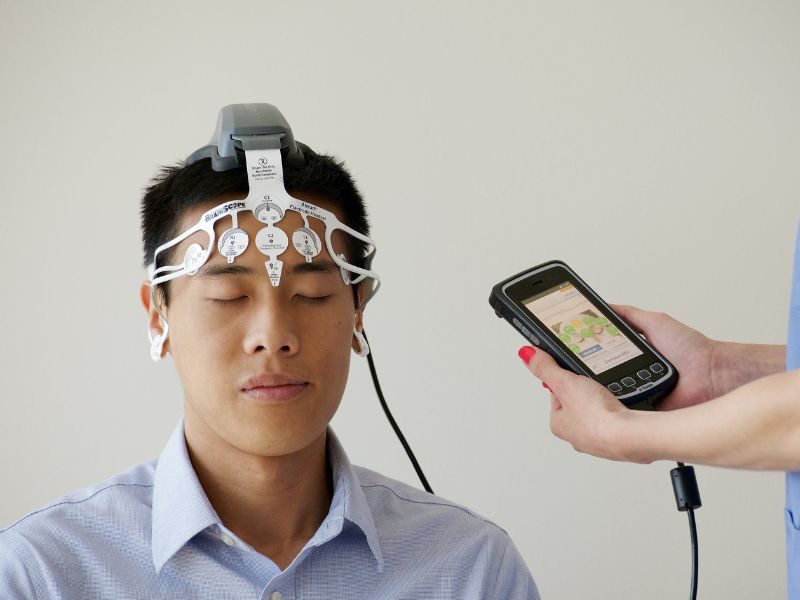
People hear “rewire your brain” and they think it sounds like some sci-fi movie. But it’s real, and its pretty simple when you break it down. What is neuroplasticity, really? It’s your brain’s ability to reorganize itself by forming new neural connections. Think of your brain like a field of grass.
When you walk the same path every day, you create a clear, worn-down trail. Your thoughts work the same way. If you constantly think “I’m not good enough,” you’ve worn a deep, easy-to-follow path for that thought.
Neuroplasticity is about choosing to walk a new path—maybe one called “I am capable”—until that one becomes the easy trail to take.
But why is the negative path so much easier to fall into? That’s the negativity bias. Your ancestors needed this. The one who spent all day smelling the flowers probably got eaten by a tiger.
The one who was constantly worried about tigers? He survived. Your brain is hardwired to pay more attention to bad experiences than good ones.
It’s a survival mechanism that’s just not that useful anymore for most of us. A single complaint can outweigh five compliments because of this bias. So if you feel like your brain defaults to the negative, dont beat yourself up. It’s not your fault; it’s your brain’s factory setting. Your job is to change the settings.
How long does this take? Everyone asks me this. There’s no magic number, but the “21 days to form a habit” idea is a decent starting point. For the first few weeks, it’s gonna feel like work.
You’ll have to consciously choose the new thoughts. After a month or two, it gets easier. After about three to six months of consistent practice, many people find that the new, positive thought patterns start to become their automatic response. It’s a long game, not a quick fix.
Do I Really Need to Rewire My Brain? Signs to Look For
How do you even know if you need a mental software update? Well, there are some pretty clear signs. Do any of these sound like you? These are common negative thinking patterns, or ‘cognitive distortions’, and they are like weeds in the garden of your mind.
- All-or-Nothing Thinking: You see things in black and white. If you’re not perfect, you’re a total failure. You mess up one part of your diet and think, “Well, the whole day is ruined, might as well eat a whole cake.”
- Overgeneralization: You see a single negative event as a never-ending pattern of defeat. You go on one bad date and think, “I’m always going to be alone.”
- Mental Filter: You pick out a single negative detail and dwell on it exclusively, so your vision of all reality becomes darkened. You get 9 positive comments on a project and 1 negative one, and all you can think about is that one criticism.
- Jumping to Conclusions: You’re sure you know what someone is thinking (mind reading) or you predict the future negatively (fortune telling). “I know they think my idea is stupid” or “I’m definitely going to fail this exam.”
The hidden cost of this is huge. It’s not just about feeling bad. Chronic negative thinking has real, physical effects. It’s linked to digestive issues, higher levels of stress hormones like cortisol, and a weaker immune system.
I once had a client who suffered from constant headaches; after we worked on his thought patterns for a few months, the headaches almost completely disappeared. His doctor was amazed. His thoughts were literally making him sick.
So here’s a quick self-assessment. On a scale of 1 to 10, where 1 is “constantly negative” and 10 is “effortlessly positive,” where do you sit right now? Be honest. There’s no judgment. Knowing your starting point is the first step on the map.
10 Proven Ways to Rewire Your Brain for Positivity

Alright, this is the core of it. The actual “how-to.” These are not just ideas; they are practices. You have to do them. I’ve seen these work for hundreds of people, and they’re backed by science. You dont have to do all ten. Just pick one or two that feel right and start there.
- Master Mindfulness Meditation: This is number one for a reason. It’s about paying attention to the present moment without judgment. It trains you to observe your thoughts without getting swept away by them. Just 5 minutes a day can make a massive difference. You just sit, and you focus on your breath. When a thought comes, you notice it, and then you gently return your focus to your breath. That’s it. You’re not trying to stop your thoughts; you’re just learning not to obey them.
- Practice Daily Gratitude: This one is so simple it feels like it shouldn’t work, but it does. Every night before you go to sleep, write down three specific things that went well that day and why. Not just “my family.” Go deeper. “My partner made me a cup of tea this morning without me asking, which made me feel cared for.” This trains your brain to actively scan for the good, fighting that negativity bias.
- Use Positive Affirmations (The Right Way): Most people do this wrong. Saying “I am a millionaire” when you have $10 in the bank just makes your brain laugh at you. The key is to make them believable. Instead of “I am fearless,” try “I am learning to be brave even when I feel fear.” It has to be something your brain can actually get on board with.
- Implement the “Name It to Tame It” Technique: When you feel a strong negative emotion—anxiety, anger, sadness—just name it. Say to yourself, “This is anxiety.” or “Ah, there’s my old friend, self-doubt.” This simple act creates a little bit of space between you and the feeling. It takes it from being an overwhelming part of you to something you are simply observing.
- Challenge Your Inner Critic: That voice in your head that says you’re not good enough? It’s a liar. When it pops up, treat it like a real person. Ask it for evidence. “Okay, voice, where’s the proof that I’m going to fail?” “Is that 100% true?” This is a core part of Cognitive Behavioral Therapy (CBT), and it’s powerful because it interrupts the automatic negative thought loop.
- Create New Neural Pathways Through Visualization: Your brain doesn’t always know the difference between a real memory and a vividly imagined one. Spend a few minutes each day visualizing your desired outcome in great detail. See yourself succeeding. Feel the emotions of that success. You’re pre-paving the neural pathway for that reality.
- Exercise Your Way to Better Mental Health: You knew this was coming. But it’s not just about “feeling good.” Exercise releases chemicals like endorphins and helps grow new brain cells. Even a 15-minute brisk walk can have a huge impact on your mood and mindset.
- Build Stronger Social Connections: We are social creatures. Isolation breeds negativity. Make an effort to connect with people who lift you up. A single meaningful conversation can change your entire outlook for the day.
- Optimize Your Sleep: Your brain does its most important rewiring work while you sleep. It cleans out toxins and consolidates memories and learning. If you’re not getting 7-9 hours of quality sleep, you’re fighting an uphill battle. It’s non-negotiable.
- Practice “Taking in the Good”: This is a technique from psychologist Dr. Rick Hanson. When something good happens, no matter how small, consciously hold onto it for 15-30 seconds. Really feel it. Savor it. This forces the experience to move from short-term memory to long-term storage, helping to build those positive neural structures.
| Strategy | Time Commitment | Key Benefit |
| Mindfulness Meditation | 5-10 mins/day | Reduces stress, improves focus |
| Gratitude Journaling | 5 mins/day | Fights negativity bias |
| Positive Affirmations | 2 mins/day | Builds believable self-confidence |
| “Name It to Tame It” | As needed | Creates emotional distance |
| Challenge Inner Critic | As needed | Stops negative thought spirals |
| Visualization | 5 mins/day | Pre-paves pathways for success |
| Exercise | 20-30 mins/day | Boosts mood-lifting chemicals |
| Social Connection | Varies | Reduces feelings of isolation |
| Optimize Sleep | 7-9 hours/night | Essential for brain repair |
| “Taking in the Good” | As needed | Hardwires positive experiences |
My 21-Day Brain Rewiring Challenge: A Plan That Works
Okay, here’s a concrete plan. I call it a challenge because it’s meant to be focused and intentional. For the next 21 days, you’re going to be a scientist of your own mind. It’s broken down into three weeks. Dont skip ahead.
Week 1: Building Awareness and Foundation (Days 1-7)
Your only job this week is to become an observer. You’re not trying to change anything yet. That’s a mistake people make; they try to fix a car without knowing what’s wrong with it.
- Daily Task: Carry a small notebook or use a notes app. Every time you catch yourself having a strong negative thought or feeling, just write it down. Don’t judge it. Just note it. “Felt anxious about work email.” “Told myself I was stupid for forgetting keys.”
- Evening Task: For 5 minutes, practice mindfulness meditation. Just focus on your breath.
- Goal of the Week: To see your patterns clearly. By day 7, you’ll have a map of your most common negative thought-trails.
Week 2: Implementing Core Practices (Days 8-14)
Now you start actively walking a new path. You’ve seen the old, worn-down trails. It’s time to forge new ones.
- Morning Task: As soon as you wake up, state one believable positive affirmation for the day. “I will handle challenges as they come.”
- Throughout the Day: When you notice a negative thought from your list in Week 1, use the “Name It to Tame It” technique. And then, challenge it. Ask, “Is this thought actually helping me?”
- Evening Task: Write down three specific good things that happened that day (your gratitude practice).
- Goal of the Week: To actively intervene in your old patterns and begin building new ones. It will feel clunky. That’s okay.
Week 3: Advanced Techniques and Habit Formation (Days 15-21)
This week is about solidifying the habit and adding more powerful tools. You’re making the new path the default path.
- Morning Task: Add a 5-minute visualization to your affirmation practice. See your day going well.
- Throughout the Day: Continue challenging negative thoughts. Now, add the “Taking in the Good” practice. When something positive happens, pause and savor it for 30 seconds.
- Evening Task: Continue your gratitude journal.
- Goal of the Week: To make these practices feel less like a chore and more like a natural part of your day. By the end of this week, you should start to feel a genuine shift in your baseline mood.
Common Mistakes People Make (And How You Can Avoid Them)
I’ve seen so many people start this journey with enthusiasm only to quit a few weeks later. Why? They usually fall into one of three traps. Knowing them ahead of time can help you avoid them.
First, there’s the “Fake It Till You Make It” trap. This is terrible advice for brain rewiring. Your brain is smart. It knows when you’re lying to it. Forcing yourself to smile and say “I’m happy!” when you feel awful inside creates internal conflict. It’s a form of self-gaslighting.
The goal isn’t to pretend the negative doesn’t exist; it’s to acknowledge it and then consciously choose to focus on something better. It’s about authentic change, not putting on a mask.
Second is the Perfectionism Trap. This one is sneaky. You start your new habits, you’re doing great, and then you have a bad day. You get angry, you have a spiral of negative thoughts, and you miss your meditation.
The perfectionist in you says, “See? It’s not working. I failed. I might as well give up.” This is a lie. Having a bad day doesn’t erase all your progress. The real win is not never falling down; it’s getting back up. If you miss a day, just start again the next day. No big deal.
Finally, there’s Expecting Overnight Results. You wouldn’t go to the gym once and expect to have a six-pack. So why would you expect to have a completely rewired brain in a week? You are undoing years, maybe decades, of mental conditioning. It takes time. Be patient with yourself.
Celebrate the small wins, like noticing a negative thought before it spirals, or having one hour where you felt genuinely content. Those small wins are the building blocks of big change.
How to Make Positive Thinking Stick for Good
The 21-day challenge is a great start, but how do you make this a lifelong habit instead of a temporary fix? You have to build a system that works for you. Creating your personal rewiring routine is key. Maybe you hate journaling but love walking in nature. Then make a mindful walk your gratitude practice.
Your routine should feel like a support, not a punishment. For me, it’s 10 minutes of meditation in the morning and a quick mental review of three good things while I brush my teeth at night. It’s simple, and it’s sustainable.
What happens when you have a bad day? Because you will. Dealing with setbacks is part of the process. The first step is not to panic. A negative thought spiral is like a whirlpool.
The more you struggle against it, the faster you sink. Instead, just acknowledge it. “Okay, I’m in a negative spiral right now.” Use the “Name It to Tame It” trick. Then, do something physical to change your state.
Go for a walk. Put on some music. Call a friend. Do anything to break the mental loop. You’re not trying to solve the problem in that moment; you’re just trying to get out of the whirlpool.
And that brings up the last, and maybe most important, point: building a support system. You can’t do this alone. Or, you can, but it’s way harder. Tell a trusted friend or partner what you’re working on.
Having someone you can text on a bad day and say, “My brain is being a jerk today,” is invaluable. Professional help, like a therapist, can also be an incredible asset. They’re like a personal trainer for your mind. They can give you tools and hold you accountable.
Does This Stuff Really Work? Some Real-Life Stories
I could talk about the science all day, but stories are what stick. I want to share two anonymized stories of people I’ve worked with that show what’s possible.
The first was a woman in her late 30s. Let’s call her Sarah. When she came to me, she was struggling with a low-grade, constant pessimism that was starting to affect her marriage and her health. Her default setting was “something will probably go wrong.” We started with the 21-day challenge.
Week 1 was a huge eye-opener for her; she hadn’t realized 90% of her self-talk was critical. Her main practice became challenging her inner critic.
Every time the voice said “You’ll mess this up,” she’d stop and say, “Thanks for your opinion, but I’m going to try anyway.” It took about four months, but the change was incredible.
She started a new hobby, something she’d been “too scared” to do for years. Her husband said it was like he had his old wife back.
She didn’t become a different person; she just became more herself, without the constant static of negativity.
The second story is a guy in his 20s, let’s call him Ben. Ben was stuck in a job he hated and felt completely powerless to change his situation. His dominant thought pattern was “I’m trapped.”
His key practice became visualization combined with gratitude. Every morning, he visualized himself working in his dream industry (graphic design). Every evening, he wrote down three things he was grateful for about his current, “terrible” job—like “it pays the bills so I can buy design software” or “my coworker Mark is a good guy.”
This shifted his perspective from “I’m a victim” to “I’m using this as a stepping stone.” Within six months, he had built a small portfolio. Within a year, he got an entry-level job in his dream field. He rewired his brain to see opportunity instead of obstacles.
These aren’t miracle stories. They are stories of consistent, intentional work. It’s possible for anyone.
Your Questions, Answered: Frequently Asked Questions
I get asked these all the time, so let’s just tackle them head-on.
Q1: Can you really, truly rewire your brain to think positive?
A: Yes. 100%. The scientific principle of neuroplasticity confirms it. It’s not about becoming a happy-go-lucky robot. It’s about changing your brain’s default setting from scanning for threats to scanning for opportunities. It takes work, but it’s absolutely possible.
Q2: How long does it really take to see results?
A: You’ll notice small changes, like catching a negative thought, within the first week or two. A more noticeable shift in your general mood and outlook often takes around 1-3 months of consistent practice. For the changes to become truly automatic and lasting, think more in terms of 6 months to a year.
Q3: What’s the difference between positive thinking and toxic positivity?
A: This is such an important question. Positive thinking is about acknowledging the reality of a situation, including the negative parts, and then choosing to focus on what you can do and the potential for good. Toxic positivity is about denying or suppressing negative emotions. It’s saying “just be positive” to someone who is grieving. Real positive thinking makes space for all emotions; toxic positivity tries to pretend the bad ones don’t exist.
Q4: Is it possible to rewire your brain at any age?
A: Yes! While the brain is most “plastic” when we’re young, neuroplasticity is a lifelong feature. It might take a bit more intentional effort to create new pathways when you’re older, but it is never too late to change your brain and your mindset.
Q5: What if the negative thoughts keep coming back?
A: They will. The goal is not to eliminate all negative thoughts forever. That’s impossible. You’re human. The goal is to change your relationship with them. To see them come, not get carried away by them, and have them visit less and less often. When they come back, it’s not a sign of failure. It’s just an opportunity to practice.